By September, the worst of the Phoenix summer may be easing, but the damage it leaves on a tree can become more noticeable. One problem worth checking for is sunscald, sometimes called sunburn. It affects bark that has received more heat and direct sunlight than it can tolerate. Young trees, thin barked species and limbs suddenly exposed by pruning are especially vulnerable.Sunscald is easy to mistake for disease, old pruning damage or simple dryness. Looking closely now can help you catch a stressed area before bark begins cracking or decay develops around the wound.
What Sunscald Looks Like on a Tree
The first sign may be a pale, yellow or bleached patch on the trunk or a major limb. As the injury worsens, the bark can darken, split, peel or sink below the surrounding surface. Damage often appears on the south or west side of the tree because those areas receive the strongest afternoon exposure.A tree may still have a green canopy while part of its trunk is injured. That is why a quick glance at the leaves is not enough. Walk around the tree and examine the trunk from ground level into the lower canopy. Pay particular attention to areas that were shaded before a large branch was removed.
Why Arizona Trees Develop Sun Damage
Tree bark provides protection, but it is still living tissue. Sudden exposure can be particularly harmful. A dense tree that is aggressively thinned may lose the natural shade that protected its trunk and inner branches. Reflected heat from pale walls, gravel, paving and pool decks can add to the stress.Citrus trees are well known for having bark that burns easily, but they are not the only trees affected. Recently planted trees and trees weakened by poor irrigation are also more exposed. Damage is more likely when a tree experiences extreme heat without enough water reaching its active root area.
Do Not Remove More Canopy to See the Damage
Once sunscald is suspected, avoid opening the canopy further. Removing healthy foliage may expose even more bark. Major corrective pruning should be based on the tree species, its condition and the time of year rather than an attempt to make the damaged section look tidier.Loose bark should not be pulled away casually. The edge between living and dead tissue may not be obvious, and unnecessary cutting can enlarge the wound. A certified arborist can determine whether the tree needs monitoring, selective pruning or another form of care.
Protect Exposed Bark Properly
University of Arizona guidance recommends protecting exposed trunk and limbs with white water based latex paint or a product made for tree trunks. For some applications, ordinary white latex paint can be mixed in equal parts with water. Oil based paint should not be used.Light coloured protection reflects sunlight and reduces bark temperature. Tree wraps are sometimes suggested, but they must be used carefully because material left in place can trap pests or eventually constrict a growing trunk. The right choice depends on the tree and the extent of exposure.
Support Recovery Without Overreacting
Keep the tree properly irrigated, but do not flood the soil in an effort to repair bark. Water should reach the root zone rather than repeatedly soaking the trunk. A layer of coarse organic mulch can reduce soil heat and slow moisture loss, provided it is kept away from the bark.Sunscald cannot always be reversed. The practical goal is to prevent the injured area from expanding and help the rest of the tree remain healthy. Watch for spreading cracks, loose bark, oozing, insect activity or canopy decline.

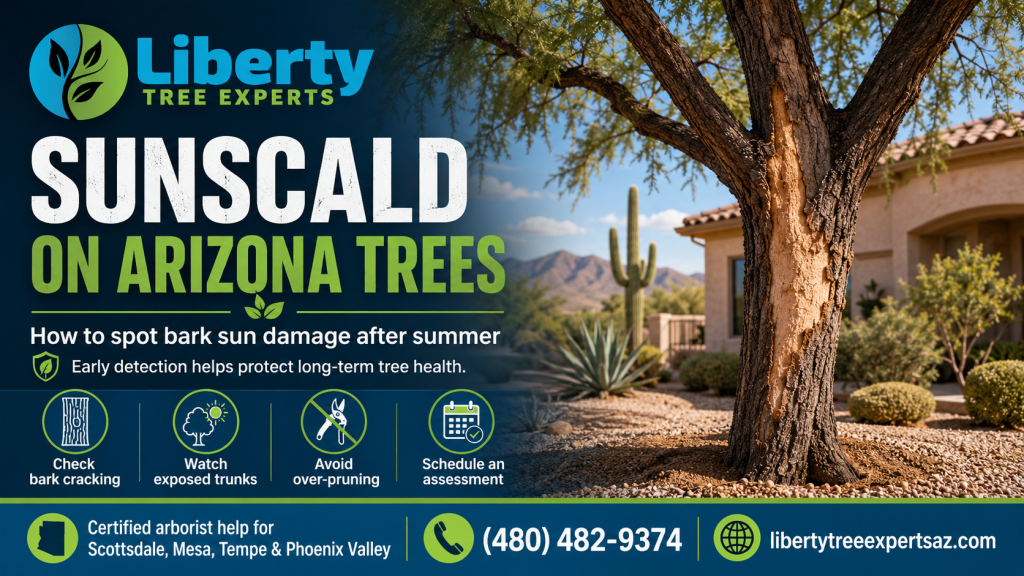 By September, the worst of the Phoenix summer may be easing, but the damage it leaves on a tree can become more noticeable. One problem worth checking for is sunscald, sometimes called sunburn. It affects bark that has received more heat and direct sunlight than it can tolerate. Young trees, thin barked species and limbs suddenly exposed by pruning are especially vulnerable.
Sunscald is easy to mistake for disease, old pruning damage or simple dryness. Looking closely now can help you catch a stressed area before bark begins cracking or decay develops around the wound.
By September, the worst of the Phoenix summer may be easing, but the damage it leaves on a tree can become more noticeable. One problem worth checking for is sunscald, sometimes called sunburn. It affects bark that has received more heat and direct sunlight than it can tolerate. Young trees, thin barked species and limbs suddenly exposed by pruning are especially vulnerable.
Sunscald is easy to mistake for disease, old pruning damage or simple dryness. Looking closely now can help you catch a stressed area before bark begins cracking or decay develops around the wound.