Tree Care The Way It Should Be

Author Archives: webtechs

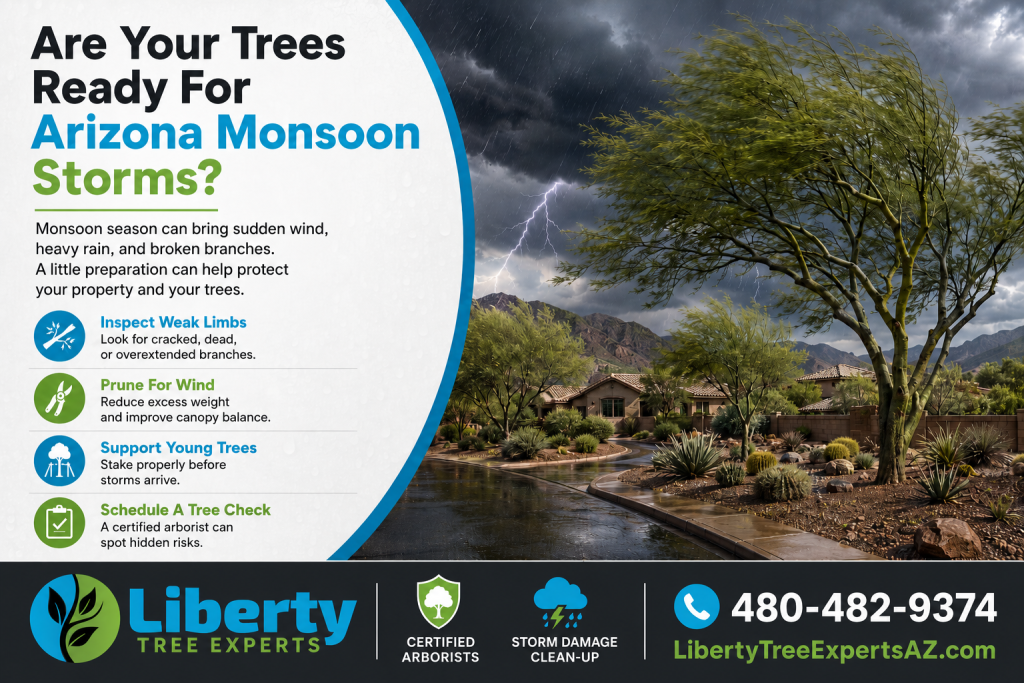
Are Your Trees Ready For Arizona Monsoon Storms?

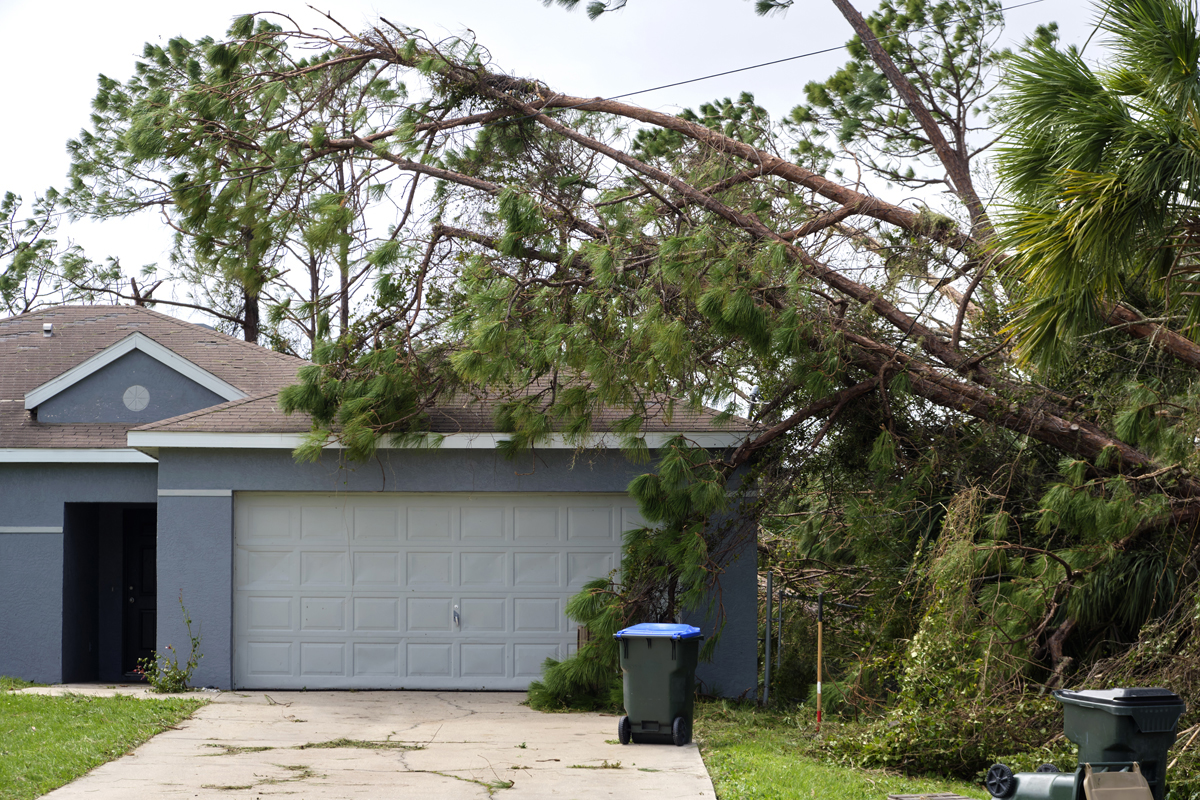
Arizona trees can look perfectly fine until the first serious monsoon storm arrives. Then the wind picks up, rain comes in sideways, and suddenly a heavy limb is on the roof, a mesquite has split, or a palm has dropped more debris than anyone expected. July is the month when tree problems stop being theoretical. A tree that has been neglected for a few seasons may have deadwood, crossed limbs, poor structure, too much canopy weight, or roots that are not holding as well as they should. Liberty Tree Experts provides professional tree care in Scottsdale, Mesa, Tempe, and throughout the Phoenix Valley, including tree trimming, pruning, tree removal, stump grinding, storm damage cleanup, cactus removal, and tree health assessments. Why Monsoon Weather Is Hard On Trees Monsoon storms bring a difficult mix of wind, rain, dust, and sudden pressure on the canopy. A tree with too much dense growth can catch wind like a sail. A weak branch may hold up during calm weather, then break once it is wet and moving. Some trees are more likely to show problems during storms, including mesquite, palo verde, acacia, eucalyptus, palms, and other common desert landscape trees. That does not mean those trees are bad choices. It means they need the right care. The University of Arizona Cooperative Extension notes that July brings heat, monsoon moisture, and changing watering needs for desert landscapes. In other words, this is a month when trees are under a lot of stress at once. Trimming Should Be Careful, Not Random Tree trimming before storm season is not about hacking a tree back until it looks empty. Over trimming can expose branches and trunks to sun damage, stress the tree, and create weak future growth. Good pruning is more selective. Dead, damaged, crossing, heavy, or poorly attached limbs may need attention. A certified arborist can look at the structure of the tree and decide what should stay and what should go. Liberty Tree Experts takes a holistic approach to tree health. Watering, soil quality, planting depth, and environment all affect how well a tree handles summer weather. Warning Signs To Look For Before the next storm, walk your property and look at your trees. Watch for dead branches, hanging limbs, cracks, leaning trunks, mushrooms near the base, exposed roots, sudden leaf loss, heavy canopy growth, or branches touching the roof. Also look at trees near walls, driveways, pools, parked vehicles, and power lines. Those are the areas where storm damage can become expensive quickly. If a tree already looks unstable, do not wait for the storm to test it. After A Storm, Safety Comes First If a branch breaks or a tree falls, avoid climbing, cutting, or pulling on heavy limbs yourself. Damaged trees can shift without warning. A split trunk or hanging limb may be under tension. Liberty Tree Experts offers storm damage cleanup and hazardous tree removal for homeowners who need safe, professional help after monsoon weather. Call Liberty Tree Experts Liberty Tree Experts provides tree service in Scottsdale, Mesa, Tempe, and across the Phoenix Valley. If your trees look overgrown, unstable, damaged, or overdue for pruning, schedule a professional assessment before the next storm. Call Liberty Tree Experts today at 480 482 9374 for a free tree service estimate. Arizona trees can look perfectly fine until the first serious monsoon storm arrives. Then the wind picks up, rain comes in sideways, and suddenly a heavy limb is on the roof, a mesquite has split, or a palm has dropped more debris than anyone expected. July is the month when tree problems stop being theoretical. A tree that has been neglected for a few seasons may have deadwood, crossed limbs, poor structure, too much canopy weight, or roots that are not holding as well as they should. Liberty Tree Experts provides professional tree care in Scottsdale, Mesa, Tempe, and throughout the Phoenix Valley, including tree trimming, pruning, tree removal, stump grinding, storm damage cleanup, cactus removal, and tree health assessments.
Why Monsoon Weather Is Hard On Trees

Monsoon storms bring a difficult mix of wind, rain, dust, and sudden pressure on the canopy. A tree with too much dense growth can catch wind like a sail. A weak branch may hold up during calm weather, then break once it is wet and moving. Some trees are more likely to show problems during storms, including mesquite, palo verde, acacia, eucalyptus, palms, and other common desert landscape trees. That does not mean those trees are bad choices. It means they need the right care. The University of Arizona Cooperative Extension notes that July brings heat, monsoon moisture, and changing watering needs for desert landscapes. In other words, this is a month when trees are under a lot of stress at once.

Trimming Should Be Careful, Not Random

Tree trimming before storm season is not about hacking a tree back until it looks empty. Over trimming can expose branches and trunks to sun damage, stress the tree, and create weak future growth. Good pruning is more selective. Dead, damaged, crossing, heavy, or poorly attached limbs may need attention. A certified arborist can look at the structure of the tree and decide what should stay and what should go. Liberty Tree Experts takes a holistic approach to tree health. Watering, soil quality, planting depth, and environment all affect how well a tree handles summer weather.

Warning Signs To Look For

Before the next storm, walk your property and look at your trees. Watch for dead branches, hanging limbs, cracks, leaning trunks, mushrooms near the base, exposed roots, sudden leaf loss, heavy canopy growth, or branches touching the roof. Also look at trees near walls, driveways, pools, parked vehicles, and power lines. Those are the areas where storm damage can become expensive quickly. If a tree already looks unstable, do not wait for the storm to test it.

After A Storm, Safety Comes First

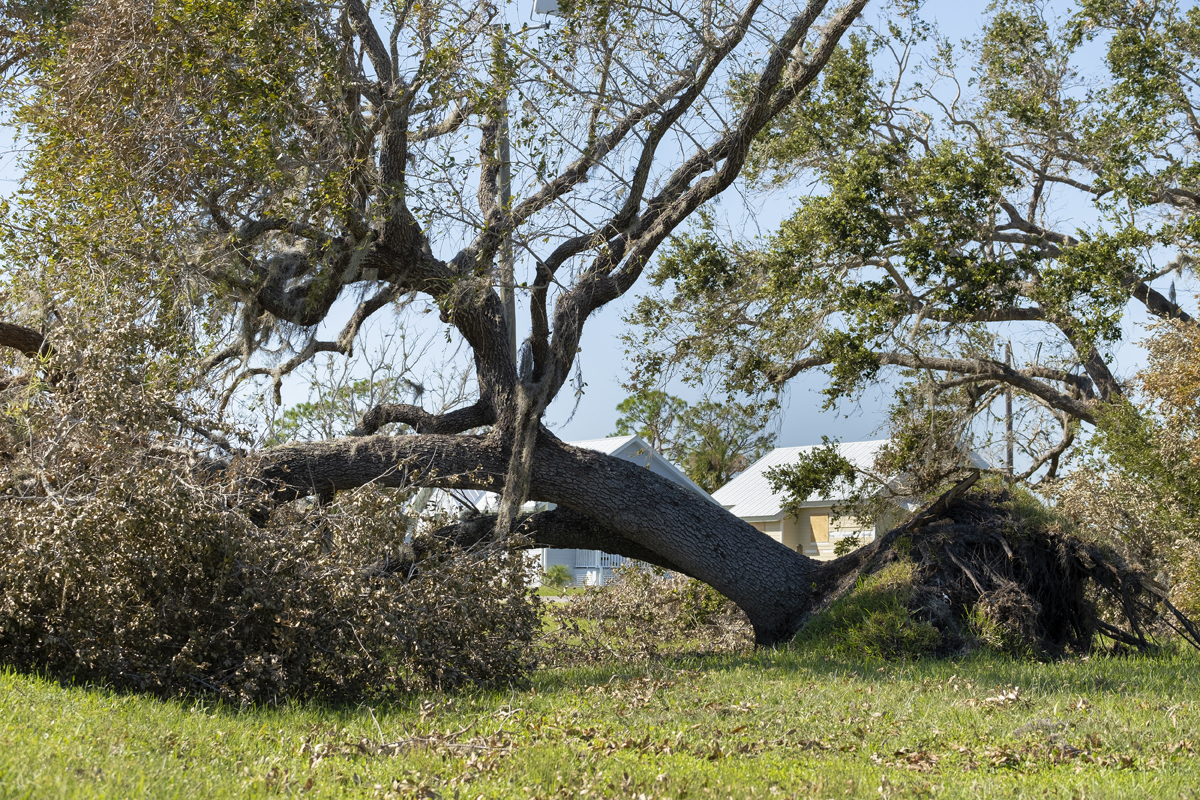
If a branch breaks or a tree falls, avoid climbing, cutting, or pulling on heavy limbs yourself. Damaged trees can shift without warning. A split trunk or hanging limb may be under tension. Liberty Tree Experts offers storm damage cleanup and hazardous tree removal for homeowners who need safe, professional help after monsoon weather.

Call Liberty Tree Experts

Liberty Tree Experts provides tree service in Scottsdale, Mesa, Tempe, and across the Phoenix Valley. If your trees look overgrown, unstable, damaged, or overdue for pruning, schedule a professional assessment before the next storm. Call Liberty Tree Experts today at 480 482 9374 for a free tree service estimate.

Liberty Tree Care Offers Tree Trimming in Scottsdale, Arizona

If you are searching for tree trimming in ScottsdaleMesa or Tempe, Liberty Tree Experts can help! Get a free tree trimming quote by giving Liberty a call today at 480-482-9374.
When Does Monsoon Season Start In Arizona

When Does Monsoon Season Start In Arizona?

When Does Monsoon Season Start In Arizona Arizona is known as the valley of the sun with more than 300 sunny days there each year. In the summertime, though, clouds build as monsoon season steps into the spotlight. Let's see what you need to know about monsoon season and when this occurs in Arizona.

When Is Monsoon Season In Arizona?

From a climate and meteorology perspective, Arizona's monsoon season occurs between June 15 through September 30. This date range remains the same each and every year. The date of June 15 is not a prediction for precipitation, however. It is simply a historically observed average date of the start of the shift in prevailing winds, transforming from a dry westerly flow to a moist southerly flow. During this time period, upper atmospheric pressure will ultimately build. Plus, with the influx of moisture, these conditions oftentimes generate thunderstorm activity. The activity tends to be quite strong over the mountainous regions where the air is forced to rise. When winds start to shift in the middle of June, the intense rain associated with monsoon season may not begin until July and August. These are the two hottest months across the state, and they produce over half of the total precipitation Arizona receives throughout the entire year. It is important to note, though, not every year features an active monsoon season.

How To Prepare Your Trees For Monsoon Season

Use the following tips to prepare your trees for upcoming monsoon storms:
  • Fertilize, mulch and water trees properly and regularly to prevent soil compacting.
  • When planting new trees, remember their size at maturity. Avoid planting trees too close to wires, buildings or other objects, on steep banks or ins hallow soil. Certain types of trees will be more brittle and susceptible to breakage. Prior to planting, research the tree and avoid issues later.
  • Prune regularly. This is important, depending on the type of tree you have this could be needed annually, bi-annually or every three years. Trees may need pruning when young too. It is best to have a professional trim your trees to ensure proper structure and avoid issues.
  • Avoid messing with soil around the roots. If excavation around roots is necessary, ensure to minimize cutting of roots or impairing them.
  • Avoid topping trees. Although common, this practice should be avoided as it guarantees the branches will eventually fail.
Although storm intensity varies each monsoon season, Arizona residents can anticipate the arrival ahead of time to ensure protection is maximized. You should never wait until monsoon season is here to begin properly preparing trees for safety of your property, and family. You should always use proactive tree care practices, because money towards maintenance now can be much cheaper compared to unexpected damages from a falling tree. If the tree lands on buildings, fences, or cars the repair costs are even higher! Remember, paying for an ounce of prevention care is worth more than a pound of the cure. Typically, after trees have become damaged there is little that can be done to correct it.

Liberty Tree Care Offers Tree Trimming in Scottsdale, Arizona

If you are searching for tree trimming in ScottsdaleMesa or Tempe, Liberty Tree Experts can help! Get a free tree trimming quote by giving Liberty a call today at 480-482-9374.

Tree Trimming In Scottsdale Before Arizona Monsoon Storms

June is a smart time to look at the trees around your property. In Scottsdale and across the Phoenix Valley, summer heat is only part of the problem. Monsoon winds, dust storms and sudden rain can put a lot of pressure on trees that already have dead limbs, heavy canopies or weak structure.

A tree may look fine from the ground until the first strong storm moves through. Then a dead branch drops, a leaning tree shifts, or a heavy limb lands too close to a roof, wall, driveway or vehicle.

Liberty Tree Experts provides tree trimming, pruning, tree removal, stump grinding and storm damage cleanup in Scottsdale, Mesa, Tempe and throughout the Phoenix Valley.

Why Tree Trimming Matters Before Monsoon Season

Arizona monsoon season can bring strong wind, blowing dust and fast changing weather. The National Weather Service warns that dust storms can arrive suddenly and may bring strong gusts with very little notice.

Trees with too much top weight can catch wind like a sail. Branches that are dead, cracked, rubbing, poorly attached or growing too close to structures can become a hazard once storms arrive.

Good tree trimming is not about cutting everything back as hard as possible. In fact, over trimming can damage a tree and make future growth weaker. The goal is to reduce risk while keeping the tree healthy and properly shaped.

Signs Your Tree May Need Professional Pruning

Some warning signs are easy to see. Others take a trained eye.

You may need professional tree pruning if you notice dead branches, broken limbs, low branches over walkways, limbs touching the roof, dense interior growth, uneven weight, storm damage, leaning, cracks in large branches or branches growing into utility areas.

Palm trees may also need attention before summer storms. Dead fronds, heavy seed pods and old skirts can become messy and dangerous in high wind. Liberty Tree Experts offers palm tree trimming and palm tree skinning for residential and commercial properties.

Tree Removal When A Tree Cannot Be Saved

Not every tree can be corrected with trimming. Some trees are dead, badly diseased, storm damaged, unstable or planted in the wrong place. If a tree is too close to a structure or has become unsafe, removal may be the better option.

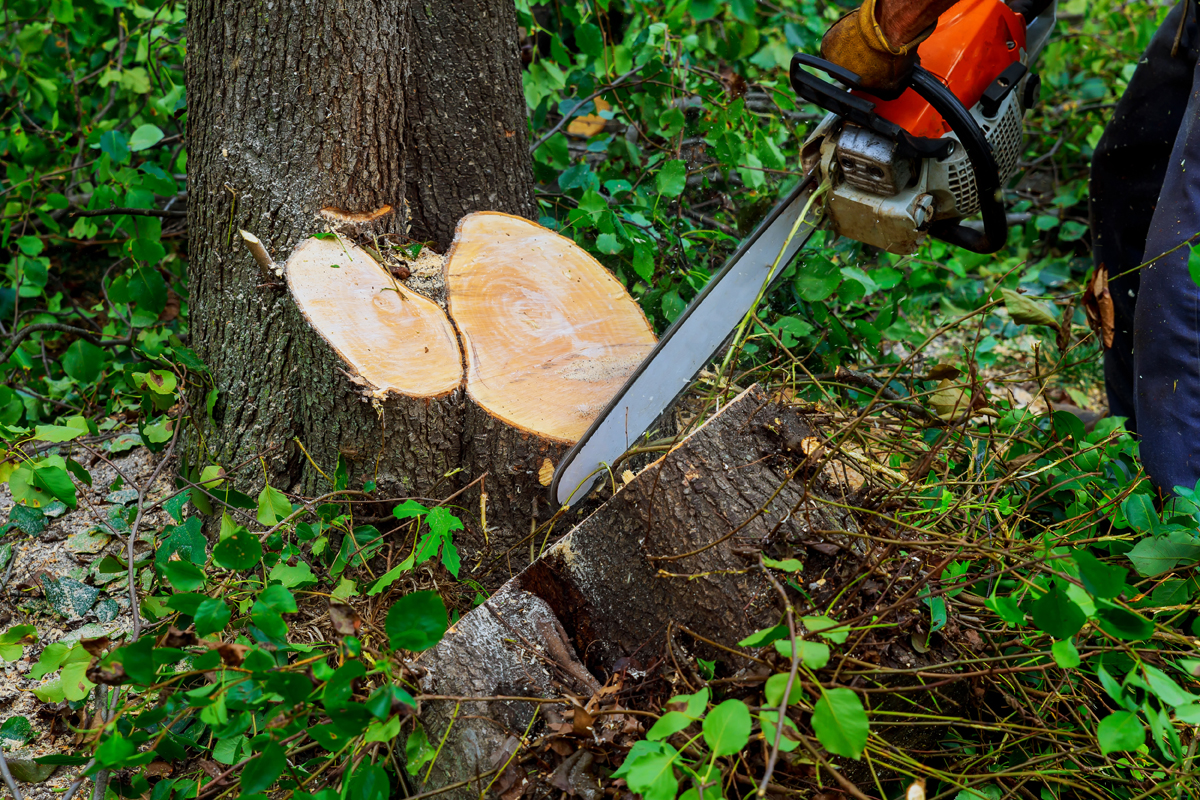
Tree removal should not be treated like a weekend project. Large trees, leaning trees and trees near walls, roofs, pools, power lines or other structures should be handled by professionals.

Liberty Tree Experts provides affordable tree removal services in Scottsdale, Mesa, Tempe and the Phoenix Valley. The team can assess the tree and explain the safest way to handle it.

Stump Grinding And Cleanup

After a tree is removed, the stump can still be a problem. It may create a trip hazard, attract pests, interfere with landscaping or make the yard look unfinished.

Stump grinding can help clear the area so the space is easier to maintain. It can also make future landscaping plans simpler.

Liberty Tree Experts also helps with storm damage cleanup when branches or trees come down after heavy weather.

Call Liberty Tree Experts

Liberty Tree Experts is a Scottsdale tree service company focused on quality tree care, fair pricing and customer satisfaction. Services include tree trimming, tree pruning, tree removal, stump grinding, palm tree trimming, palm tree skinning and storm damage cleanup.

If your trees look heavy, uneven, damaged or overdue for trimming, June is the time to schedule service before the worst summer storms arrive.

Call Liberty Tree Experts today at 480 482 9374 for a free tree service estimate in Scottsdale, Mesa, Tempe or anywhere in the Phoenix Valley.

References:

https://libertytreeexpertsaz.com/

https://libertytreeexpertsaz.com/az-tree-services/

https://libertytreeexpertsaz.com/az-tree-services/trimming-and-pruning/

https://libertytreeexpertsaz.com/az-tree-services/tree-removal/

https://libertytreeexpertsaz.com/contact-us/

https://www.weather.gov/psr/MonsoonSafety

Liberty Tree Care Offers Removal in Scottsdale, Mesa & Tempe

If you are searching for tree removal in ScottsdaleMesa or Tempe, Liberty Tree Experts can help! Get a free tree removal quote by giving Liberty a call today at 480-482-9374.
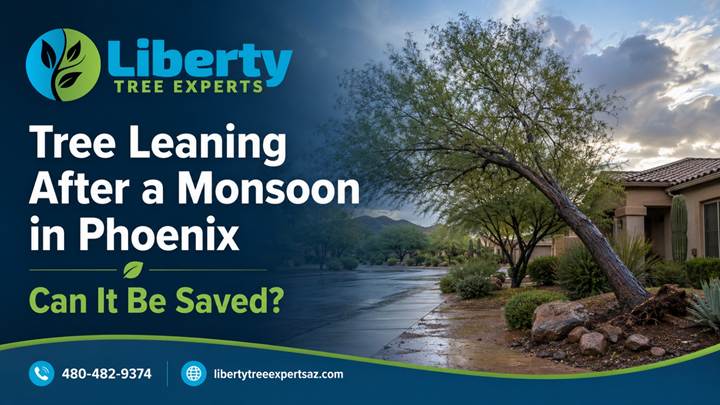
How-To-Cut-A-Leaning-Tree

How To Cut A Leaning Tree

How-To-Cut-A-Leaning-Tree It's vital for homeowners to take action before a leaning tree falls as this could potentially result in damage to nearby structures and objects. Use the guide below to properly cut a leaning tree down.

How To Fell A Leaning Tree

The first part of this process is determining whether or not the tree can be saved. You can stabilize a leaning tree with a good root system intact with the use of cables. It's best to cut the tree down in the event the roots look damaged or weak. Inspect the tree for any storm damage like broken branches before choosing to cut it down. Follow these steps to properly fell the tree:
  • Always plan your approach to the tree cutting process carefully.
  • Refrain from damaging anything nearby.
  • Check the surrounding area and map out a safe zone on the ground.
  • Determine the direction you wish the tree to fall.
  • Make sure the tree will fall away from any structures or objects.
  • Immediately dispose of any debris after the tree has been cut down.

How To Fell A Leaning Tree In The Opposite Direction

Felling a leaning tree in the opposite direction calls for a different technique altogether. Use these steps below:
  • At waist-high, tie a rope around the trunk of the tree.
  • Ensure the rope is taut and secure.
  • In the side of the trunk that's facing away from the direction you wish the tree to fall, cut a notch.
  • This notch should be cut about one-third of the way through your trunk.
  • Cut one more notch into the opposite side of trunk directly above where the first cut ends.
  • Ensure this cut is perpendicular to the first cut.
  • Begin cutting the tree down from the top.
  • Angle the cut in the direction you wish the tree to fall.
  • Use your rope to guide the tree in the proper direction.
  • Always have at least one helper for this task.

Liberty Tree Care Offers Tree Trimming in Scottsdale, Arizona

If you are searching for tree trimming in ScottsdaleMesa or Tempe, Liberty Tree Experts can help! Get a free tree trimming quote by giving Liberty a call today at 480-482-9374.

Cactus Removal Guide

Learn everything you need to know about professional cactus removal below!

Professional Cactus Removal

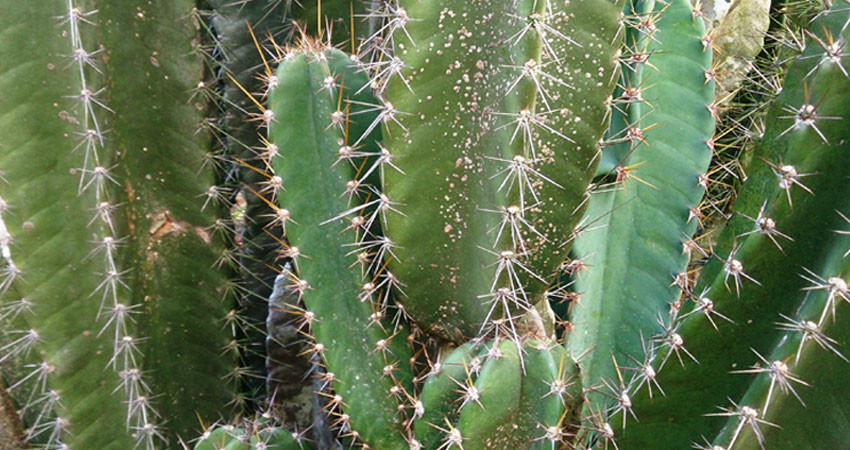
When shopping around for cactus removal companies to have your cactus removed without putting you or your family in danger, schedule an assessment today! Want to avoid hazardous cactus spikes covered with the disease that causes Bacterial Necrosis? You certainly do. Are you wanting to remove the Saguaro cactus on your own? You certainly do not. A cactus spikes can do a number on shoes, carpets and your home, and can be dangerous for young children and pets; have a Liberty Tree Expert professional remove the cactus that is problematic. And bear in mind, our cactus removal estimates are free! Do you want a free estimate from a certified arborist? Give Liberty Tree Experts a call today. We are more than happy to provide you a free estimate. In some circumstances, we can provide same day estimates and will easily beat any of our competition’s prices.

How Much Does Cactus Removal Cost?

Cactus removal cost is $1,400 with an average cost ranging from $300 to $2,500. The approximate cactus removal cost is subject to the size of the cactus, how accessible it is and if anything is around it. The larger the cactus is going to increase the cost of its removal. Removal costs for Saguaro cactus will be the costliest because how big they are. In addition, costs are subject to the number of arms the cactus has. Cacti come in every shape and size but have one thing in common: they are hazardous and are difficult to remove. Liberty Tree Experts cactus removal professionals operate specialized tools to safely remove the cactus on your property. No matter if it's a tall, crooked Saguaro or an area of prickly pears, we are able to take them out. We have been offering cactus removal service in the Phoenix area for years, and our knowledge and experience shows it. You can put your trust in our cactus removal professionals. * These are not actual cactus removal costs. In order to get an actual estimate, we’ll send one of our certified arborists out to your property, do an assessment of the cactus, and give you a true estimate. cactus-removal-cost

Cactus Removal Services In Phoenix, Arizona

If you would like to receive a free cactus removal cost quote anywhere in the Phoenix Valley, Liberty Tree Experts can help! We offer affordable cactus removal services in Scottsdale, Phoenix, Chandler, Gilbert, Mesa, Glendale and more. Remove those sick or dying cactus from your residential yard or commercial property. Call us today at 480-482-9374.
Does Palm Tree Trimming In The AZ Summer Help Sustain The Life Of The Tree

Does Palm Tree Trimming In The AZ Summer Help Sustain The Life Of The Tree

Palm Tree Care Palm trees are part of the Arizona look. You see them around pools, entryways, shopping centers, golf courses, resorts, and older neighborhoods where they have been standing for decades. They can look almost effortless, but they still need proper care, especially once the summer heat settles in. So, does trimming palm trees in the Arizona summer help sustain the life of the tree? Sometimes, yes. But only when it is done correctly. Trimming can remove dead fronds, reduce falling debris, limit pest hiding places, and keep the tree looking cleaner. Over trimming, however, can stress the palm and do more harm than good.

Summer Trimming Can Be Helpful

Arizona summers are harsh. Heat, monsoon winds, dust storms, and dry air can all put pressure on palms. Dead or dying fronds can become heavy, messy, and sometimes dangerous when storms roll through. Removing dead fronds before they fall can help protect people, cars, roofs, patios, and pool areas. It can also make it easier to spot signs of pests, disease, or structural problems. For many property owners, summer trimming is as much about safety and maintenance as appearance. That said, trimming should be careful and selective. A palm tree is not helped by stripping it bare.

Do Not Over Trim The Crown

One of the most common mistakes is the so called “hurricane cut,” where too many green fronds are removed and only a small upright tuft is left at the top. It may look tidy for a short time, but it can weaken the palm. Green fronds are how the palm feeds itself. They help produce energy through photosynthesis. When too many healthy fronds are removed, the tree has less ability to handle heat, recover from stress, and grow properly. A good rule is to remove dead, badly damaged, or clearly dying fronds. Healthy green fronds should usually stay unless there is a strong reason to remove them.

Watch For Seed Pods And Debris

Summer trimming often includes removing seed pods, fruit stalks, and loose debris. This can reduce mess around pools, sidewalks, driveways, and patios. It may also help limit unwanted seedlings and keep pests from being drawn to dropped fruit. For homeowners, this is one of the biggest benefits of routine palm care. It keeps the property cleaner and reduces the number of surprise messes after a windy afternoon.

Timing Matters In Arizona

Palm trimming can be done in warmer months, but the tree’s condition matters. If a palm already looks stressed, yellowing, thin, or unhealthy, it should be inspected before trimming heavily. Monsoon season is another consideration. Trimming before storms can reduce falling fronds and debris. However, it should still be done conservatively. The goal is not to make the palm look skinny. The goal is to make it safer and healthier.

Call Liberty Tree Experts

If your palm trees need summer trimming, Liberty Tree Experts can help keep them clean, safe, and properly maintained without over stressing the tree. Contact Liberty Tree Experts today to schedule professional palm tree care for your Arizona property.

References

Liberty Tree Experts, Tree Services

University Of Florida IFAS Extension, Pruning Palms

University Of Arizona Cooperative Extension, Palm Problems In Arizona

Arizona Municipal Water Users Association, Landscape Plants For The Arizona Desert

International Society Of Arboriculture, Tree Pruning

Receive A Free Palm Tree Trimming Cost Quote

If you would like to receive a free palm tree trimming cost quote anywhere in the Phoenix Valley, Liberty Tree Experts can help! We offer affordable palm tree trimming services in Scottsdale, Phoenix, Chandler, Gilbert, Mesa, Glendale an more. Remove those sick or dead palm trees from your residential yard or commercial property.

Mesquite Tree Trimming Costs 2026

If you have a mesquite tree in Arizona, you probably already know they can get out of hand faster than people expect. One year they look fine, then suddenly the canopy is spreading, limbs are hanging lower, and after a windy stretch the whole thing starts looking a little rough. That is usually when homeowners start asking the question, what is this going to cost to trim properly?

In 2026, mesquite tree trimming in Arizona usually costs somewhere between $250 and $700 for a typical professional job. Smaller trees can cost less, sometimes closer to $100 to $250, while large mature mesquites can run $600 to $800 or more depending on how much work they need.

WHY ONE MESQUITE CAN COST MORE THAN ANOTHER

This is where people get tripped up. They hear a number from a friend or neighbor and assume their tree should cost about the same. Sometimes that happens. A lot of times it does not.

A younger mesquite in an open front yard is usually a simpler job. A big older tree with heavy limbs, dense growth, or awkward access is a different story. If the crew has to work around a wall, a roof, power lines, or tight backyard space, the labor goes up. If the tree has not been trimmed in years, that can raise the price too.

So when a company gives you a quote, they are not just charging for “trimming a mesquite.” They are charging for the size of the tree, the condition it is in, how difficult it is to reach, and how long it is likely to take to do the work the right way.

WHY MESQUITES NEED TRIMMING IN THE FIRST PLACE

A mesquite is not the kind of tree you want to ignore forever. They grow fast, and if they are left alone too long, the canopy can get heavy and unbalanced. That may not seem like a big deal until monsoon season rolls in and the wind starts pushing on those long limbs.

Good trimming helps with shape, clearance, and overall stability. It can also keep branches from crowding roofs, driveways, walkways, or other parts of the yard. Just as important, it helps the tree look like it belongs there instead of looking tired and overgrown.

CHEAPEST IS NOT ALWAYS BEST

This is one of those jobs where going with the lowest number can come back to bite you. A bad trim can leave a mesquite looking hacked up, stressed, or just plain odd. Worse, poor cuts can affect how the tree grows later.

A proper trim should make the tree look cleaner and more balanced without making it look stripped bare. That takes some judgment, not just a ladder and a saw.

WHEN IT IS TIME TO CALL SOMEONE

If your mesquite is starting to droop, scrape the roof, crowd the yard, or just look too dense, it is probably time to have it looked at. Waiting usually does not make the job cheaper. In a lot of cases, it just gives the tree more time to become a bigger project.

If you need help with a mesquite tree in Arizona, Liberty Tree Experts can take a look, explain what the tree needs, and give you a clear quote for the work. Reach out today and get ahead of the problem before a few overgrown limbs turn into a much larger headache.

REFERENCES

Liberty Tree Experts, Mesquite Tree Trimming Costs Arizona 2026

Liberty Tree Experts, Mesquite Tree Trimming Costs 2025

HomeGuide, Tree Trimming Cost 2026

University of Arizona Extension, July Monthly Gardening Guide for Pima County

University of Arizona Extension, Pruning Trees and Shrubs PDF

University of Arizona Extension, Mesquite and Palo Verde Trees for the Urban Landscape PDF

Liberty Tree Care Offers Tree Services in Scottsdale, Mesa & Tempe

If you are searching for tree service in ScottsdaleMesa or Tempe, Liberty Tree Experts can help! Get a free tree service quote by giving Liberty a call today at 480-482-9374.
[/vc_column_text][/vc_column][/vc_row]
Palm Tree Stump Removal Cost

Palm Tree Stump Removal Cost

Palm Tree Stump Removal Cost Getting rid of the stump is the final step of any palm tree removal process. For this professional service, you can expect to pay between $75-$425. The overall cost will vary based on the factors outlined below.

How Much Does Palm Tree Stump Removal Cost?

Typically, the removal of a palm tree stump is easier than other stump removals. The factors that will impact the price are the stump's size, accessibility, and necessary tools for the job. A large stump with poor accessibility will generally lead to a higher overall cost of removal. Here is a quick breakdown of typical costs associated with palm tree stump removal:
Lowest Cost $75
Average Cost $250
Highest Cost $425

Palm Tree Stump Removal Cost Factors

Below are several variables that can impact the total price you'll pay for professional palm tree stump removal.

Size Of The Stump

The size of the stump is the biggest factor determining cost. As you could've guessed, the larger the stump, the higher the cost.

Accessibility

If the stump is quite easy to access, the cost will be closer to the cheapest side. However, if the stump is located close to a home or other structures, the job becomes more complex and costly.

Soil Condition

Palm trees grow in many different kinds of soil, including both sandy and loamy soil types. Depending on the soil type, palm tree roots can grow deeper. Palm roots tend to grow deeper in sandy soil compared to loamy soil. It will be tougher for the professionals to remove a stump that features a deep root system.

Roots

Palm trees have fibrous roots, while the majority of other trees feature tap root systems. The fibrous roots are in place to keep the palm securely in the ground. Deeper root systems, as discussed, will come with higher removal costs.

Needed Tools

If a grinder is needed for the removal, this typically costs $3-$5 per inch to grind the stump.

DIY Vs Professional Palm Tree Stump Removal

It's no secret doing this task yourself will save you money. However, if you do not have the expertise, skills, or proper equipment for this task, then this is best left to the professionals. It's suggested to hire a professional for this service. Hiring the tree professionals will offer the following benefits:
  • Safest removal option.
  • Aesthetics.
  • Can save money and time in the future.
  • Will always have the proper equipment for the task.
*These are cost estimates according to GoTreeQuotes. Contact the experienced team at Liberty Tree Experts for more information.

Cactus Removal Services In Phoenix, Arizona

If you would like to receive a free cactus removal cost quote anywhere in the Phoenix Valley, Liberty Tree Experts can help! We offer affordable cactus removal services in Scottsdale, Phoenix, Chandler, Gilbert, Mesa, Glendale and more. Remove those sick or dying cactus from your residential yard or commercial property. Call us today at 480-482-9374.
Fertilizing A Tree In Arizona

Fertilizing A Tree In Arizona

In Arizona, fertilizing a tree is not the same as fertilizing one in an area of the nation that is colder and wetter. Desert soils can be hard, alkaline, and poor in the organic stuff that trees like to grow in. This implies that trees that seem healthy may not always be able to acquire the nutrients they require. The good news is that the correct kind of fertilizer may really help. If done right, it can help the tree's roots grow stronger, its color get better, and its general health. The most important thing is to determine when a tree really needs attention and how to do it without going overboard.

Why Trees in Arizona Might Need Fertilizer

A lot happens to trees in Arizona. Many trees thrive in less than optimal settings because of the hot, dry summer weather, the compacted soil, and the urban landscapes that don't work like natural forest soil. That doesn't mean that every tree requires fertilizer all the time. Some trees that live in the desert may get by with very little food. Fertilizing a tree could be a good idea if it starts to exhibit indications of stress. A tree that needs more nutrients may have smaller leaves, a bad color, scant canopy development, and weak overall health. The problem for many properties isn't only that they don't have enough nutrients; it's also that those nutrients need to go down to the root zone where the tree can use them.

When To Fertilize A Tree In Arizona

Timing is important. In Arizona, spring or fall is the optimum time to fertilize many trees. Feeding in the spring might help plants develop before the summer heat hits them hard. Fertilizing a tree in the fall can help it get back on its feet after the long, hot summer and get ready for hibernation in healthier shape. You should try to avoid giving a lot of fertilizer to a tree while it's really hot outside, especially if it's already stressed. Pushing new growth at the incorrect moment might make things worse for the tree instead of assisting it. It is also vital not to fertilize trees that have just been planted too much. Before they can grow, newly planted trees require time to grow roots. In the beginning, watering the plants correctly and covering the soil with mulch are sometimes more crucial than fertilizer.

Deep Root Fertilization And Why It Helps

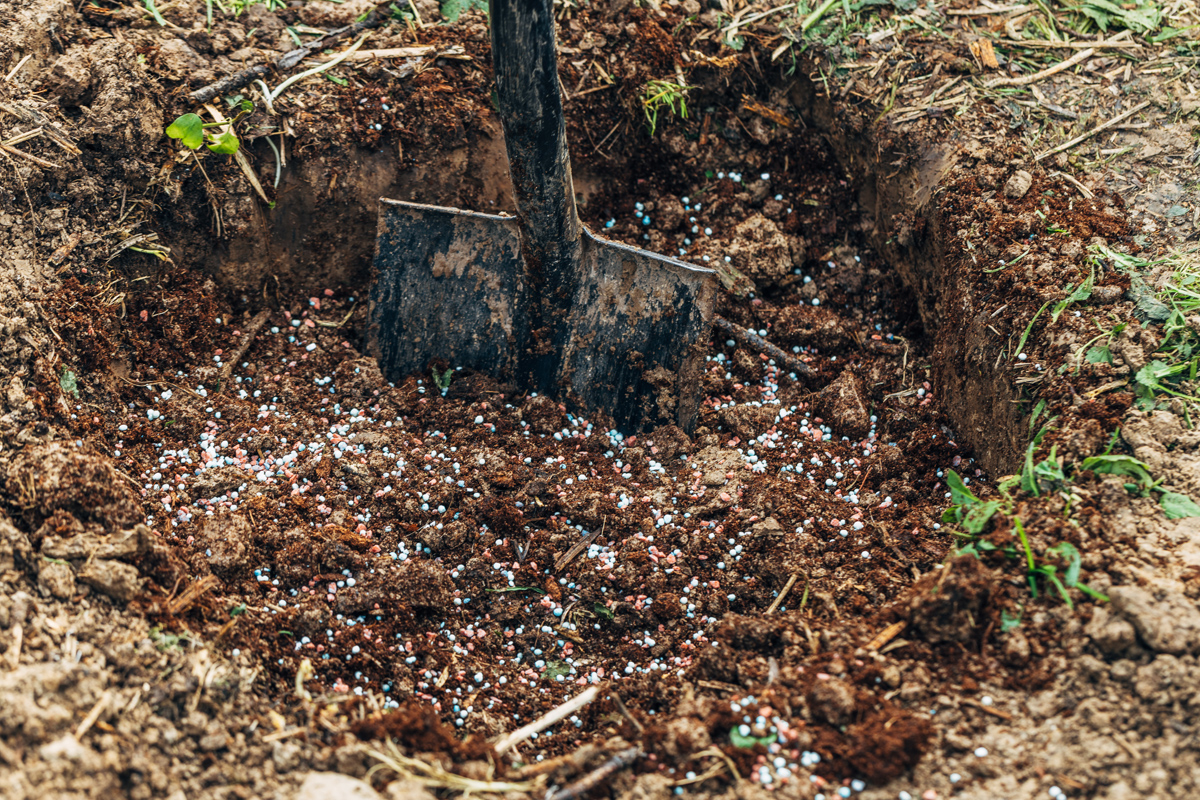
Deep root fertilization is one of the best ways to help many trees in Arizona. Instead than merely putting fertilizer on the top, this procedure puts nutrients straight into the soil surrounding the root zone. This technique is especially beneficial in adverse soil environments, including those characterized by compaction or drought, where surface application may be ineffective. Furthermore, deep root fertilization enhances soil aeration, thereby promoting the direct transport of nutrients and moisture to the root zone.

Why Professional Tree Care is Important

An expert's initial step involves assessing the specific plant species, the soil's characteristics, its watering needs, and any visible signs of distress. This approach goes beyond mere nourishment; the goal is to foster the tree's long-term well-being. If your tree seems sick or isn't growing as it should, call Liberty Tree Experts right away for a professional evaluation and help with tree fertilization in Arizona.

Liberty Tree Care Offers Tree Trimming in Scottsdale, Arizona

If you are searching for tree trimming in ScottsdaleMesa or Tempe, Liberty Tree Experts can help! Get a free tree trimming quote by giving Liberty a call today at 480-482-9374.

References

https://libertytreeexpertsaz.com/

https://libertytreeexpertsaz.com/deep-root-fertilization/

https://extension.arizona.edu/sites/default/files/2024-08/az1048.pdf

https://extension.arizona.edu/sites/extension.arizona.edu/files/attachment/ornamentaltreecare.pdf

https://extension.arizona.edu/publication/fertilizer-quick-guide

How-To-Save-A-Dying-Cactus

Why Is My Cactus Turning Yellow?

How-To-Save-A-Dying-Cactus One of the biggest reasons why a cactus may be turning yellow is overexposure to sunlight. While cacti do love light, it's important for homeowners to recognize when they might be receiving too much sunlight.

Common Causes Of A Cactus Turning Yellow

Let's take a look at a few reasons why your cactus may be turning yellow.

Too Much Sunlight

The amount a sunlight needed depends on the specific type of cactus. Homeowners will be able to tell how much light it needs by checking the cactus for any discoloration. Whenever a cactus becomes orange or yellow, this means it has been exposed to too much light. If the cactus is relocated from subtle to excess light, there is a chance it could get singed by the sun.

Indoor Setting

Cacti placed by windows indoors can become yellow specifically when facing south. Try placing a net type of canvas over the window and check over the cactus for any noticeable discoloring. The cactus can be positioned further away from the window if any discoloration is found. Testing multiple locations might be necessary to eventually find the best spot possible for the cactus.

Cactus Placement

Cacti need at least 6-8 hours of daily sunlight to survive and ultimately thrive. If you choose to bring your cactus inside from overwintering, place it in a moderate light area for a few days to start. Slowly, you can begin to increase the light exposure of your cactus. This will give it a better chance to adapt to its new environment.

Not Enough Light

As mentioned, too much sunlight can damage a cactus. It is important to note that too little light can also hurt the cactus. Cacti growing toward a light source need to be placed closer to the light. If you wish to restore the shape of the cactus, turn it each week so light hits all sides of the plant.

Cactus Removal Services In Phoenix, Arizona

If you would like to receive a free cactus removal cost quote anywhere in the Phoenix Valley, Liberty Tree Experts can help! We offer affordable cactus removal services in Scottsdale, Phoenix, Chandler, Gilbert, Mesa, Glendale and more. Remove those sick or dying cactus from your residential yard or commercial property. Call us today at 480-482-9374.