Tree Care The Way It Should Be

Category Archives: Trees In Arizona

Tips For Watering Trees in Arizona

Tips For Watering Trees in Arizona

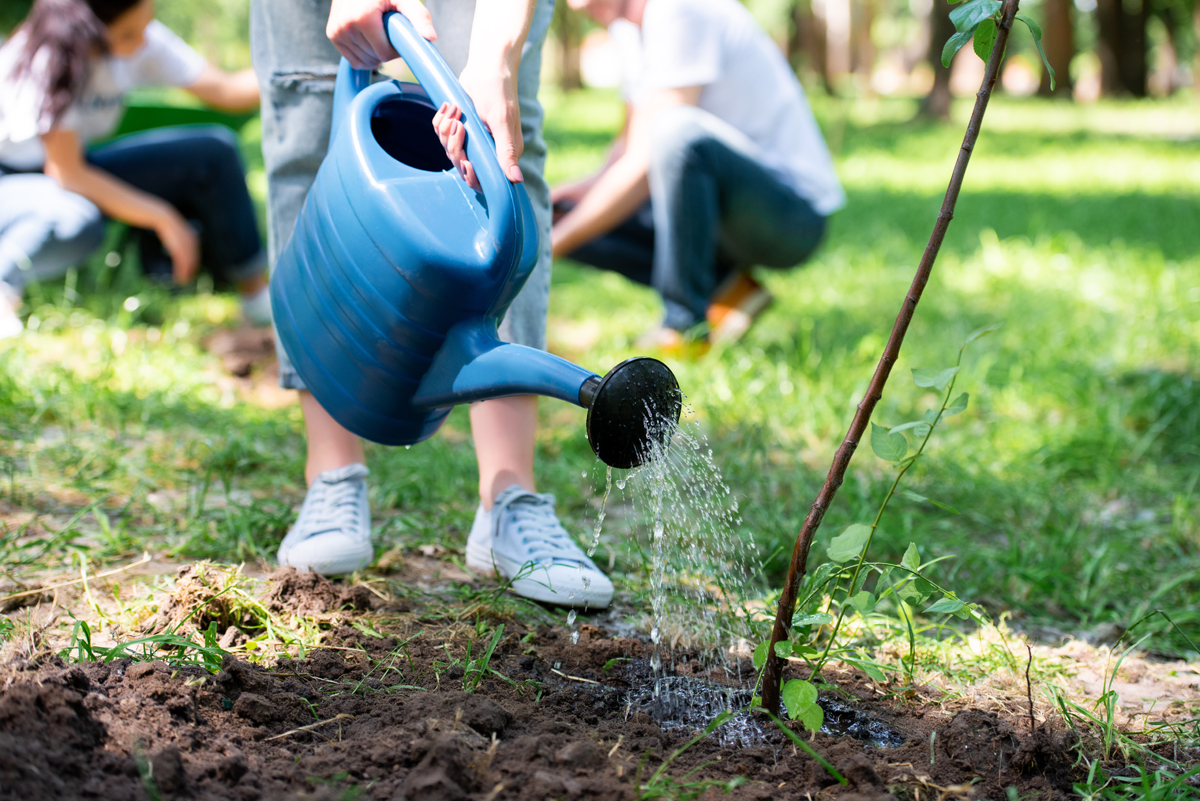
Tips For Watering Trees in Arizona Watering trees in Arizona's arid climate requires careful attention to ensure their health and longevity. Here are some practical tips:

1. Understand Tree Watering Needs

  • Young Trees: Newly planted trees need more frequent watering (every 2-3 days initially, tapering to once a week after a few months).
  • Established Trees: Mature trees can thrive with deep watering every 2-4 weeks, depending on the season.

2. Water Deeply and Infrequently

  • Focus on deep watering to encourage deep root growth. Water should penetrate 2-3 feet into the soil, which is where most tree roots grow.
  • Avoid shallow, frequent watering, as it promotes surface roots that are more vulnerable to heat and drought.

3. Water at the Drip Line

  • The “drip line” is the outer edge of the tree canopy. Water here rather than near the trunk to target the area where feeder roots absorb water most effectively.

4. Water Early in the Morning or Late Evening

  • Watering during cooler times of the day reduces evaporation and ensures more water reaches the roots.

5. Adjust for Seasons

  • Summer (May–September): Water more frequently, but still deeply.
  • Winter (October–April): Reduce watering frequency, as trees are less active during cooler months.

6. Monitor Soil Moisture

  • Check soil moisture 12-24 inches deep using a soil probe or screwdriver. If it’s dry at that depth, it’s time to water.

7. Use Mulch

  • Apply a 2-4 inch layer of mulch around the base of the tree (but not touching the trunk) to retain soil moisture and reduce temperature fluctuations.

8. Use Efficient Irrigation Methods

  • Drip irrigation or soaker hoses are ideal for slow, deep watering.
  • If using a garden hose, let it run slowly to ensure deep penetration without runoff.

9. Choose Native or Drought-Resistant Trees

  • Native or desert-adapted trees like Palo Verde, Mesquite, or Ironwood require less water once established.

10. Look for Signs of Overwatering or Underwatering

  • Overwatering: Yellowing leaves, standing water, or soggy soil.
  • Underwatering: Wilting, browning leaves, or dry, cracked soil.
By following these tips, you'll help your trees thrive even in Arizona's challenging environment.

Liberty Tree Care Offers Tree Services in Scottsdale, Mesa & Tempe

If you are searching for tree service in ScottsdaleMesa or Tempe, Liberty Tree Experts can help! Get a free tree service quote by giving Liberty a call today at 480-482-9374.

Arizona-Shade-Trees-That-Dont-Shed

Best Arizona Shade Trees

Arizona-Shade-Trees-That-Dont-Shed Arizona summers come with extreme heat and daily sunshine. So, how can you give your yard and home an escape from the non-stop sunshine? If you are currently searching for "best arizona shade trees that dont shed", this article is for you! Consider planting some of the following shade trees that will save you from constantly cleaning and skimming.

Palo Verde

Palo Verde trees can be seen all across the valley and they stand out due to how green they appear throughout the year. Every part of the tree is green, from the trunk all the way up to the branches. Another pro is the fact that these trees are some of the most drought-tolerant plants in the desert. Palo Verdes need no supplemental water supply to live and flourish. If any extreme drought occurs, the leaves can be shed, but they are extremely small, so the workload will not be overwhelming to any homeowners.

Arizona Cypress

This drought-tolerant cypress tree is native to the southwestern U.S. so it is very used to surviving the hot Arizona summers. This tree is commonly chosen by homeowners for various reasons. The Cypress tree does not shed a lot, it provides shade, breaks up wind patterns and it can also be used as a Christmas tree. Growing approximately 18 inches per year, the Cypress can reach heights up to 50-feet tall. Direct sunlight for at least six hours a day will suffice.

Arizona Rosewood

Enjoy the beauty provided by trees in your backyard but are tired of skimming the pool for leaves? The Arizona Rosewood serves the best of both worlds. The Rosewood will not grow too large, so you'll never have to worry about it growing over property lines. Reaching a height of about 10 feet, the Rosewood will also provide a present in the spring season: growing small white flowers.

Willow Acacia

The Willow Acacia is an Australian tree that has made a home providing shade in southern Arizona. This tree tends to grow fast and narrow, perfect for homeowners without a ton of space in their yard. Willows will grow to a maximum height of 30 feet, and just like Rosewoods they will produce beautiful flowers in the spring.

Ironwood

Ironwood trees grow exclusively in the Sonoran Desert, so these plants know how to flourish in Arizona. In fact, these trees are some of the oldest found in the desert, surviving for the last 1,200 years! Lavender flowers will spring from the trees as soon as the weather warms up. They can stand anywhere from 25 - 45-feet tall.

Liberty Tree Care Offers Tree Services in Scottsdale, Mesa & Tempe

If you are searching for tree service in ScottsdaleMesa or Tempe, Liberty Tree Experts can help! Get a free tree service quote by giving Liberty a call today at 480-482-9374.
More Articles About Arizona Landscaping

Low Maintenance Plants Arizona

Low Maintenance Plants Arizona

Low Maintenance Plants Arizona Gardeners and landscapers across the state of Arizona depend on low-maintenance plants that can thrive with very little care. If you are looking for the best low-maintenance plants in the valley of the sun, we've highlighted some of our favorites below.

Dalea

These are a diverse group of plants that can survive and thrive the extreme Arizona summers. There are nearly 200 Dalea species, which includes both trees and shrubs. The pea-shaped flowers can come in three different colors, including yellow, purple and rose.

Sugar Bush Rhus Ovata

Growing to an average of 3-4-feet tall, the Rhus Ovata features green leaves with a hint of red around the edges. During the fall seasons, the leaves will turn a beautiful shade of red/orange. At this time, the plant will also produce small yellow flowers.

Little Leaf Cordia Cordia Parvifolia

This small and shrubby tree can grow as high as 6-feet tall. It features a broad, rounded canopy that will bloom white flowers during the spring. The bark is typically brown colored, with small and pointed leaves.

Feathery Cassia Cassia Nemophila

This is an evergreen shrub that grows rather quickly. This plant loves when direct sunlight touches its needle-like leaves. This shrub can also flower, growing round yellow clusters near the ends of the branches.

Eremophila

Straight from the semi-arid to arid regions of Australia, this is considered a group of evergreen plants. The emu bushes grow in several different soil types, with the ability to survive for long periods of time without water.

Chihuahuan Sage Leucophyllum Laevigatum

This low-maintenance plant can thrive in the extreme Arizona climate. This features small leaves, producing lots of purple flowers over time. These shrubs can grow as high as 4 feet and as wide as 5 feet.

Liberty Tree Care Offers Tree Services in Scottsdale, Mesa & Tempe

If you are searching for tree service in ScottsdaleMesa or Tempe, Liberty Tree Experts can help! Get a free tree service quote by giving Liberty a call today at 480-482-9374.

Arizona Ash Tree Problems

With more than 65 known species in the state, it's safe to say Ash Trees thrive in the Arizona climate. However, there are a few problems and diseases that can harm these trees.

Types Of Arizona Ash Trees

The following is a list of some of the most common varieties of ash trees found in Arizona:
  • Chichuahua ash – Fraxinus papillosa
  • Goodding ash – Fraxinus gooddingii
  • Fragrant ash – Fraxinus cuspidate
  • Singleleaf ash – Fraxinus anomala
  • Littleleaf ash – Fraxinus greggii
  • Arizona ash – Fraxinus vulutina (also referred to as ‘modesto ash’ and ‘velvet ash’.
  • Shamel ash – Fraxinus uhdei (also referred to as ‘tropical ash’)
  • Fantex ash -  Fraxinus velutina (also referred to as ‘Rio Grande ash’)
  • Green ash – Fraxinus pennsylvanica (also referred to as ‘water ash’ or ‘swamp ash’)
  • Raywood ash – Fraxinus oxycarpa
There are various positive features about the Arizona ash tree, but all things have a downside. The ash tree was labeled by Horticulturist Calvin R. Finch, Ph.D. as being ‘trash trees’ due to them being partly messy and only having a lifespan up to 30 years.

Ash Tree Characteristics

The Arizona ash tree sheds leaves after the growing season is over, making them deciduous. Of course, many tree varieties are considered to be a messy tree, but the positive side is that the majority of ash trees only shed leaves for a couple weeks. Additionally, the majority of ash tree varieties will produce seedlings one time per year (in large amounts), or throughout the year. This all depends on the gender of the tree, and which species it is. When it comes to having an ash tree, and you want your landscape looking clean you will need to rake on occasion. Most ash trees grow very quickly, which is great for adding shade. However, this also has its downsides. The quicker trees grow, the more likely they are to have surface roots. Ash tree roots commonly grow near the surface anyway, but are more tolerant against rocky soil and alkaline. Watson and Gilman described green ash trees in a Fact Sheet, reporting the surface roots may “lift sidewalks, curbs, and be a nuisance when mowing”. Meanwhile, Finch quickly indicated the quick growth creates another downside, common with ash trees, “Unless they are pruned regularly, they can quickly grow into a tangled mess causing branch dieback.” You should prepare to have ash trees trimmed every few years, which promotes healthy canopy and branch structure growth. If ash trees are not trimmed, it can lead to branches being weak and breaking when multiple trunks gather too close. This creates a hazard from structural failure. The best approach is to establish a single ‘central trunk’ during the tree’s youth. Depending on the variety of ash tree, they can range from 40ft to 50ft when mature, with some reaching over 80ft high. All ash trees will provide a round, full canopy with great shade.

Ash Tree Diseases

Similar to other plants, Arizona ash trees are also vulnerable to different types of disease and pests. These include different fungal infections, mildews, rust disease, leaf scorch, and many types of pests from carpenter worms and webworms to mites and borers. The Verticillium wilt is especially harmful as it is soil-borne fungus. There are regions around the country, especially in the Midwest, where thousands of ash trees have been killed off by emerald ash borer’s. However, Arizona ash trees have been lucky enough to evade this issue, so far. You can learn more regarding the emerald ash borer at Emerald Ash Borer. When trees have poor environmental conditions, it increases their vulnerability to these type of issues, making it important to maintain the tree’s defense with proper fertilizing and watering.

Ash Tree Maintenance

If well maintained, ash trees are beautiful and lush. However, when ash trees are not properly cared for they can become a nasty sight, and increases the risk of tree disease and pests. Although there are ash tree varieties which are rather resistant to drought, the majority of them will require regular watering. The best setting would be flood irrigation systems. Therefore, if your landscape is not irrigated, you should use a garden hose to mimic this, and do a deep watering one or twice monthly. If you are located within Arizona and you desire to have a healthy and great looking ash tree in your yard, you should prepare yourself for the increased water bill each month. You’ll also want to remember to regularly fertilize the ash tree(s), placing mulch down will also help. By applying mulch, you will increase the quality of the soil, as the organic matter will break down over time. However, mulch also assists with retaining the moisture, meaning watering less often. Although Arizona ash trees are not the simplest tree varieties to care for, they can be well worth the extra work. When properly taken care of, ash trees will provide amazing shade, and enhance the overall landscape.

Liberty Tree Care Offers Tree Services in Scottsdale, Mesa & Tempe

If you are searching for tree service in ScottsdaleMesa or Tempe, Liberty Tree Experts can help! Get a free tree service quote by giving Liberty a call today at 480-482-9374.
Arizona-Shade-Trees-That-Dont-Shed

Arizona Shade Trees That Don’t Shed

Arizona-Shade-Trees-That-Dont-Shed Arizona summers come with extreme heat and daily sunshine. So, how can you give your yard and home an escape from the non-stop sunshine? If you are currently searching for "arizona shade trees that dont shed", this article is for you! Consider planting some of the following shade trees that will save you from constantly cleaning and skimming.

Palo Verde

Palo Verde trees can be seen all across the valley and they stand out due to how green they appear throughout the year. Every part of the tree is green, from the trunk all the way up to the branches. Another pro is the fact that these trees are some of the most drought-tolerant plants in the desert. Palo Verdes need no supplemental water supply to live and flourish. If any extreme drought occurs, the leaves can be shed, but they are extremely small, so the workload will not be overwhelming to any homeowners.

Arizona Cypress

This drought-tolerant cypress tree is native to the southwestern U.S. so it is very used to surviving the hot Arizona summers. This tree is commonly chosen by homeowners for various reasons. The Cypress tree does not shed a lot, it provides shade, breaks up wind patterns and it can also be used as a Christmas tree. Growing approximately 18 inches per year, the Cypress can reach heights up to 50-feet tall. Direct sunlight for at least six hours a day will suffice.

Arizona Rosewood

Enjoy the beauty provided by trees in your backyard but are tired of skimming the pool for leaves? The Arizona Rosewood serves the best of both worlds. The Rosewood will not grow too large, so you'll never have to worry about it growing over property lines. Reaching a height of about 10 feet, the Rosewood will also provide a present in the spring season: growing small white flowers.

Willow Acacia

The Willow Acacia is an Australian tree that has made a home providing shade in southern Arizona. This tree tends to grow fast and narrow, perfect for homeowners without a ton of space in their yard. Willows will grow to a maximum height of 30 feet, and just like Rosewoods they will produce beautiful flowers in the spring.

Ironwood

Ironwood trees grow exclusively in the Sonoran Desert, so these plants know how to flourish in Arizona. In fact, these trees are some of the oldest found in the desert, surviving for the last 1,200 years! Lavender flowers will spring from the trees as soon as the weather warms up. They can stand anywhere from 25 - 45-feet tall.

Liberty Tree Care Offers Tree Services in Scottsdale, Mesa & Tempe

If you are searching for tree service in ScottsdaleMesa or Tempe, Liberty Tree Experts can help! Get a free tree service quote by giving Liberty a call today at 480-482-9374.

More Articles About Arizona Landscaping

Best Time Of Year To Trim Trees In Arizona

The best possible time to trim trees in Arizona will vary based on type of tree. Timely trimming can help your trees look better, live longer, and improve overall health. This article will tell you exactly when to cut different tree species.

Best Time To Trim Trees

For all Arizonans, the best time of year to trim certain trees may differ depending on location. Southern Arizona citizens should typically trim trees at different times than those living in Northern Arizona. These differences are based on when the cold seasons set in at various parts of the state. Tree trimming is certainly not a one-size-fits-all task. Different species, located in different areas will need to be trimmed accordingly. This article will go over the best time to trim these tree species:
  • Citrus trees
  • Fruit trees
  • Oak trees
  • Palm trees
  • Maple trees
  • Mesquite trees
  • Desert trees
  • Evergreens

Citrus Trees

These trees are sensitive to frost damage. While it is extremely rare for the desert to reach frost-inducing temperatures, it is still suggested that you wait until February to trim citrus trees. The prime season to trim these trees starts around the middle of February and lasts until the end of March. Try to avoid trimming any later than the end of March, as the foliage helps protect trunks from being scorched by the summer sun.

Fruit Trees

Fruit trees, featuring apples, pomegranates, nuts, nectarines, apricots and peaches, are best to trim from December until February. Most owners will want to control the height of the fruit bearing tree branches, since trimming makes harvesting all of the aforementioned fruits much easier.

Oak Trees

The colder months of the year are the times when oak trees should be trimmed. Just like fruit trees, it is recommended to wait until December before trimming. Perform any trimming all the way up until mid February, when temperatures begin to rise in Arizona.

Palm Trees

The best time to trim palm trees is considerably later in the year than citrus trees. Experts suggest waiting until after mid June to trim these trees. This is the best time of the year to remove seeds that are forming, plus any dead fronds or leaves.

Maple Trees

Maple tree trimming should be completely avoided during the winter months. During this time, the trees will ooze sap. Trimming will cause the trees to bleed, typically leaving a mess in your yard.

Mesquite Trees

Mesquite trees grow exceptionally fast with long branches developing quickly. Therefore, it is best to trim these trees ahead of monsoon season. The months of May and June are the ideal times to trim mesquite trees. Avoid any storm damage by trimming before the storms.

Desert Trees

Trim desert trees from December all the way through February. These trees need to be dormant in order to avoid any stress caused by pruning.

Evergreens

The month of March is the perfect time to trim evergreens. If you forget or can't get to the trees in March, then September is the only other month when trimming should be performed.

Liberty Tree Care Offers Tree Services in Scottsdale, Mesa & Tempe

If you are searching for tree service in ScottsdaleMesa or Tempe, Liberty Tree Experts can help! Get a free tree service quote by giving Liberty a call today at 480-482-9374.

More Articles About Arizona Landscaping

Can You Grow Lemon Trees In Arizona?

Citrus plants are very popular in Arizona. Many homeowners choose citrus plants because it's so easy to grow them in Arizona's hot and dry climate. Citrus plants that tend to flourish in the area include Oranges, Lemons, Limes, Pumelos, and Mandarins, among others. But what about lemon trees? Can you grow lemon trees in Arizona? The answer is yes!

Grow Lemon Trees Indoors And Outdoors

Lemon trees certainly grow well when potted, which leads to a lot of homeowners planting them indoors. Plant the lemon tree in a place that can be drained well, while also leaving a lot of room for the plant to grow and expand. Indoor lemon trees tend to grow no larger than five feet in height. Lemon trees need a full day of sunlight, so be sure to plant this where the sun shines brightly. It's also okay to put the tree outdoors during the warmer months and bring them back in overnight, or even for good once the temperatures begin to dip consistently. Placing the trees outdoors will allow for the necessary pollination by bees. When you opt to plant the tree outdoors, exposure to sunlight is the most important thing. Make sure your lemon tree is placed in a spot where it can receive as much sunlight as possible. These trees are a bit sensitive to cooler temperatures, so that's why a lot of sunlight is crucial for them to flourish. In Arizona, the best place to plant these trees tends to be on the south side of the home. Frost can be devastating for these trees, but this issue is rare in Arizona.

Watering Lemon Trees

The lemon tree needs to be moist when it is planted. After that process is completed, though, it is recommended to water the tree slowly and deeply once per week during the summer and twice per week during the remainder of the year. These trees thrive when the soil is slightly dry in between watering sessions.

Fertilization

Tree experts recommend fertilizing your lemon tree three times per year. Ideally, fertilizing them in February, May and September works best. Choose to use slow release, organic fertilizers for your trees.

Sunlight

As mentioned above, these trees need an abundance of sunlight to grow. Sunlight and heat are keys to producing sweet and delicious fruit. But what about sun damage? If you notice some leaf scorch toward the end of the summer season, this is perfectly normal, so don't panic. Younger lemon trees will show more scorching than older trees.

Soil For Lemon Trees

A great way to keep the roots moist is to lay down a layer of mulch that is a few inches thick, running out to the drip line that is used for watering. Lemon trees prefer a slightly acidic and well-drained soil.

Protect Against Frost

It is extremely rare, but pay attention to the forecasts just in case there is a chance of frost overnight in Arizona. If there is a chance, your best course of action is to cover your young lemon trees. Protect the trees with burlap and frost cloth, if possible. A sheet or blanket can also be effective, but refrain from using any plastic coverings. Once the temperature has risen above freezing, uncover the plants and let them soak up the sun for the day.

Liberty Tree Care Offers Tree Services in Scottsdale, Mesa & Tempe

If you are searching for tree service in ScottsdaleMesa or Tempe, Liberty Tree Experts can help! Get a free tree service quote by giving Liberty a call today at 480-482-9374.