
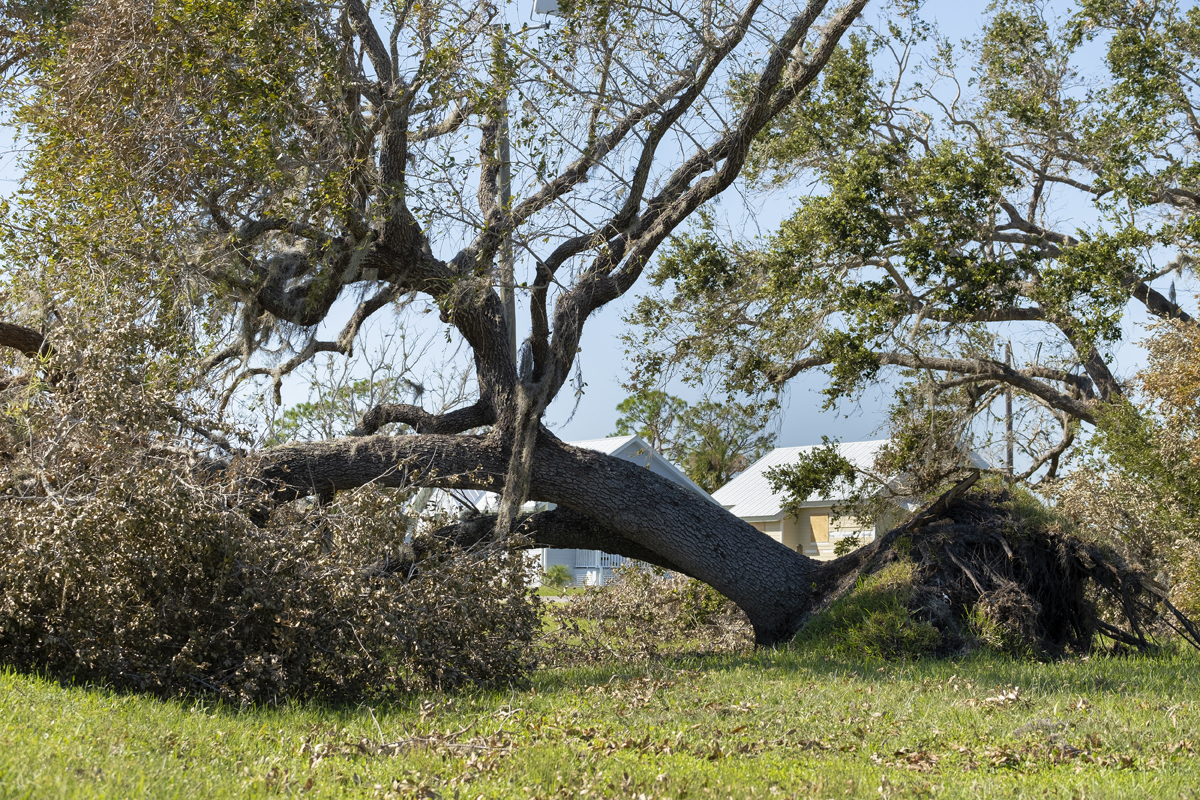
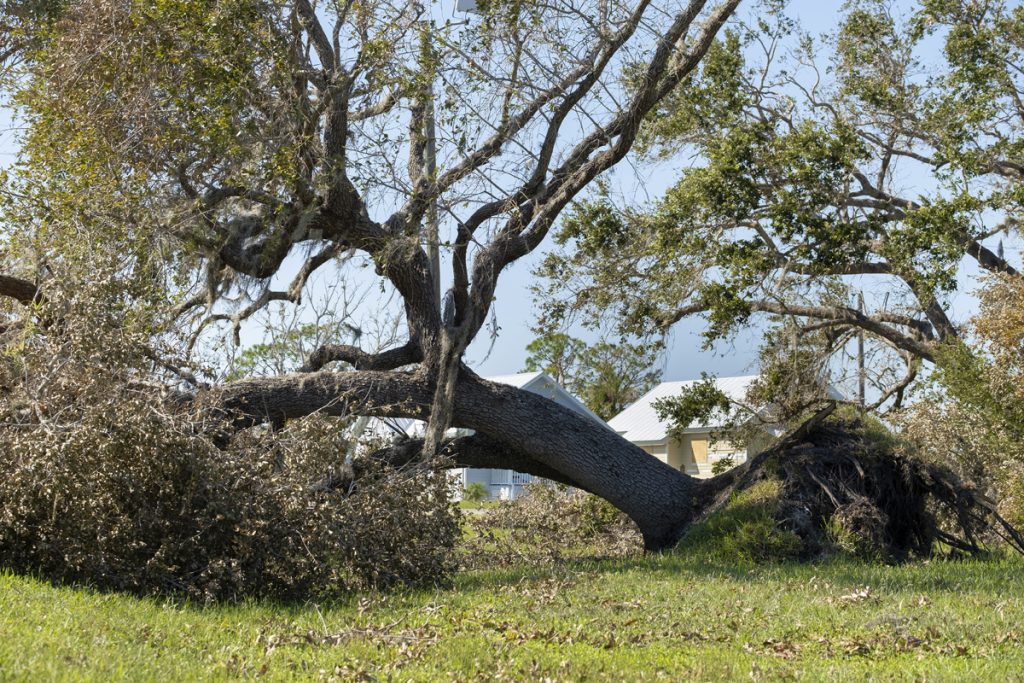
Your homeowners insurance policy may cover costs related to damage caused by a fallen tree, branch, or limb to your home and/or other structures located on your property. This ultimately includes damage caused to your property by a neighbor’s tree. Let’s take a look at a few different storm damage scenarios and when insurance will cover you.
Does Homeowners Insurance Cover Storm Damage To Trees?
It is possible for your homeowners insurance policy to pay for any damage done to your home, belongings, or other structure(s) on your property minus your deductible. Insurance may also pay for the cleanup and removal of the tree. However, insurance may not cover the damage if it was caused by the homeowner’s negligence.
When a tree falls and damages your property because of your negligence, the homeowner will then be on the hook for all the related costs. Regardless of how the damage occurred, it’s always best to take as many pictures as you can prior to submitting a claim.
Here is a quick look at the possible tree damage coverage scenarios:
| Reason The Tree Fell And Caused Damage | Does Insurance Cover It? |
| Other trees, winds, tornados, or hurricanes | Yes |
| Vandalism | Yes |
| Struck by lightning | Yes |
| Rot or decay | No |
Will Fallen Trees From A Neighbor’s Yard Be Covered?
When a tree falls from your neighbor’s property onto your yard due to a covered peril, insurance will likely cover the damage. A neighbor’s tree that falls onto your yard without causing any damage will not result in any insurance coverage.
Regardless of the condition of said tree, cleanup and removal costs will be the responsibility of the homeowner. Of course, there’s always the option of asking your neighbor for assistance when it comes to both the cleanup and resulting costs.
Does Insurance Cover Your Tree Falling Onto A Neighbor’s Property?
It is possible your neighbor’s insurance policy will cover any damage caused by a fallen tree from your property. The neighbor, though, has the right to prove your negligence if the tree is visibly damaged or rotting.
Your insurance may be on the hook for the damage costs if you are found liable. If the tree falls onto a neighbor’s property without causing any damage, their insurance will likely cover these costs.
Does Homeowners Insurance Cover Tree Removal?
Home insurance typically pays for repairs and tree removal when a tree falls on a home due to a storm. However, if the tree simply falls over in the yard without causing any damage, the homeowner must cover the expenses.
Home insurance will not usually cover the tree removal unless it ultimately falls on the home, fence, or garage. It is possible for insurance to pay for a tree removal if it is blocking your driveway or a wheelchair ramp.
Reference your insurance policy and contact your agent for further information. Typically, home insurance policies will cover tree removal up to $1,000 per storm.
Large tree removals, of course, will come with the biggest price tag. These removals will generally cost about $1,500 but can climb to $2,000 total. Some homeowners may not like this price tag at all. Trying to removed the tree yourself, though, is not advised. This is a task best left up to the professionals, as costly as it may seem.
The removal costs so much simply due to the extensive manual labor. A medium-sized tree is priced around$630. To qualify as a medium-sized tree, it must be between 25-75 feet tall. The lowest possible cost for a medium tree removal is $210. Smaller trees (less than 25-feet tall) will cost around $330 to remove.
*These are cost estimates. Contact the experienced team at Liberty Tree Experts for more information.
Receive A Free Stump Grinding Cost Quote
If you would like to receive a free stump grinding cost quote anywhere in the Phoenix Valley, Liberty Tree Experts can help! We offer affordable stump grinding services in Scottsdale, Phoenix, Chandler, Gilbert, Mesa, Glendale an more. Remove those sick or dead palm trees from your residential yard or commercial property.