
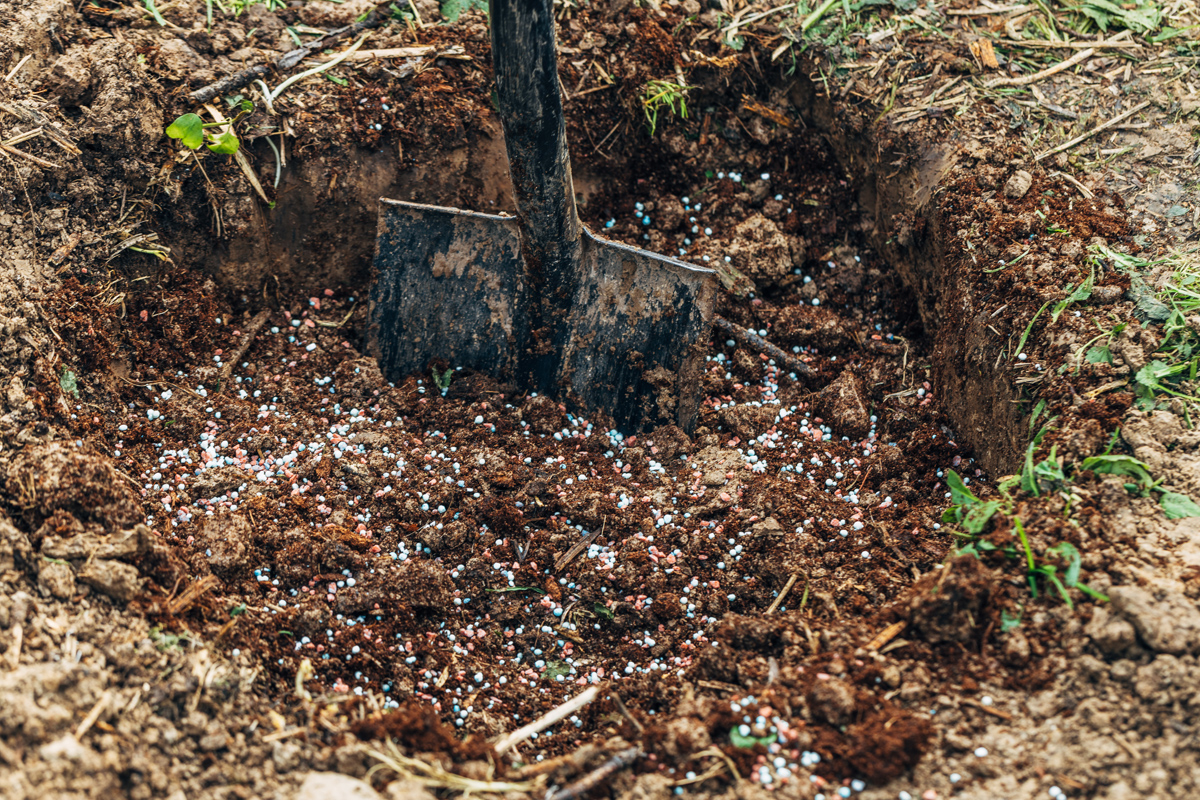
What Is Deep Root Fertilization For Trees?
It’s no secret deep root fertilization is aimed to help your trees thrive in Arizona. With a blend of essential nutrients, this process is designed to restore the tree’s overall health. There are some of he elements used here that are commonly found in forest soil. Oftentimes, residential landscapes lack these nutrients.
When fertilizer is injected into the soil, it will go deep into the tree roots where it is needed. This high-quality fertilizer will be distributed evenly throughout the tree in a process referred to as translocation.
Do My Trees Need Deep Root Fertilization Treatment?
Trees can undoubtedly survive without this treatment, but they may never thrive. Without deep root fertilization, some trees may be more susceptible to diseases and pests.
The benefits associated with this treatment include promoting growth, improving overall appearance, and strengthening the root system. Spring fertilization is designed to supply nutrients to the tree as it prepares for the upcoming summer. Summertime can be quite difficult for many trees, especially in the extreme heat of Arizona.
This service can also be quite impactful during the fall. This is a crucial time for trees as they have been typically depleted of some much-needed nutrients over the summer. Fall fertilization offers support for the upcoming healthy dormancy period when trees start preparing for the winter months.
A struggling tree may show smaller or fewer leaves, discoloration, or even minimal growth. If you notice any of these issues, it’s best to consider a deep root fertilization process.
How To Deep Root Fertilize Your Trees
To properly perform the deep root fertilization process, follow these steps:
- Do a thorough check of the area to assess the health of both the tree and soil.
- Look for any soil compaction issues or nutrient deficiencies.
- Use a fertilizer that is a slow-release, balanced fertilizer, which is best for soil and trees.
- Now grab a soil needle or deep root feeder to continue.
- Always follow safety precautions during this process.
- Evenly distribute the fertilizer throughout the root zone.
- Ensure that no damage is done to the tree roots.
- Monitor the soil and tree conditions regularly.
- This can include adjusting the fertilization schedule to improve growth.
Deep Root Fertilization Benefits
- Trees have a healthier appearance.
- Aerates the soil for better growth opportunity.
- Reduces soil compaction.
- Promotes growth of new plant shoots.
- Prevents potential frost damage and sunburn.
Conclusion
The fertilization of trees represents a considerably more intricate undertaking than the fertilization of typical residential and garden vegetation. Multiple considerations must be evaluated to guarantee that the procedure is executed appropriately. Initially, a comprehensive soil examination is instrumental in identifying the optimal timing for this procedure.
The soil’s pH measurement will indicate whether conditions are sufficiently favorable for nutrient absorption from the fertilizer. Naturally, no single pH value proves universally suitable for all trees and shrubs.
Varying pH levels demonstrate superior efficacy depending on the specific tree species present in your landscape design. Oak trees, as an illustration, require a soil pH range of 5-7 to facilitate proper nutrient assimilation from the fertilizer.
Additional variables, including the physiological condition and maturity of the trees and shrubs, warrant consideration when establishing the optimal fertilization schedule. The fertilizer formulation itself should incorporate an appropriate proportion of nitrogen, potassium, phosphorus, and supplementary constituents to address the specific requirements of the trees.
Liberty Tree Care Offers Tree Trimming in Scottsdale, Arizona
If you are searching for tree trimming in Scottsdale, Mesa or Tempe, Liberty Tree Experts can help! Get a free tree trimming quote by giving Liberty a call today at 480-482-9374.